
Strategy & Cash-Out Tips That Actually Help
No system can predict a fair crash point — but smart staking, sensible targets and ironclad discipline genuinely improve how long and how enjoyably you play. Here is an honest guide.

Contents
The Honest Truth About "Strategies"
Let's get one thing out of the way: because each crash point is fixed by a certified random number generator before the round starts, no betting system can predict or change the outcome. Anyone selling a guaranteed winning formula is lying to you. What strategy actually does is manage your risk, make your bankroll last and keep your decisions steady. That's worth a lot — it's just not a way to beat the odds.
Think of it the way a careful card player thinks about a game of chance: you can't change the cards, but you can absolutely change how much you wager, when you walk away and how you react to a losing streak. Everything below is built on that realistic foundation.
Bankroll Management Comes First
Before any clever cash-out idea, decide on a session budget and divide it into many small units. A common rule is to make each bet no more than 1–2% of your total bankroll. With that ratio, even a brutal run of early crashes won't wipe you out, and you'll have enough rounds left to ride out the variance. Skip this step and the most beautiful strategy in the world will still collapse the first time the dragon wakes early five rounds in a row.
Equally important is setting a stop point in both directions: a loss limit that ends the session if you hit it, and a win goal that locks in profit before you give it back. Writing these numbers down before you start removes the emotional, in-the-moment decisions that destroy most bankrolls.
When I tested the low-stake approach across a long demo session, the 1–2% rule made a real difference to how the evening felt. With small units I rode out a streak of about a dozen early crashes without the balance ever looking scary — and that calm is exactly what stops you from doubling up out of frustration. It's a boring tip, but it's the one I'd defend hardest.

The Low-Multiplier (Safe) Approach
The most sustainable style for the high-volatility curve is to cash out early and often. Target a modest multiplier — somewhere between 1.2x and 1.5x — and take the win the moment it appears. Individually these payouts are small, but they land far more frequently than big ones, which keeps your balance steady and your session long. Pair this with auto cash-out and you remove the temptation to "just wait a little longer".
This approach won't give you a screenshot worth bragging about, but it's the steadiest, grind-it-out way to play. For beginners especially, spending your first demo sessions cashing out at 1.3x is the quickest way to learn how the curve behaves without losing round after round to late crashes.
The Balanced Two-Bet Approach
The dual-bet feature suits a balanced style well. Place two equal wagers in the same round and treat them differently: set the first to auto cash-out at a safe target like 1.5x, and let the second ride toward something bigger such as 3x or beyond. On most rounds the first bet banks a small profit and cushions the loss if the second crashes — and when a round runs hot, the second bet is the one that pays off.
This hedge is popular precisely because it feels good to play. You win something on the majority of rounds while still keeping a live shot at the larger multipliers, which makes the inevitable dry spells far easier to sit through.
The High-Risk Chase Approach
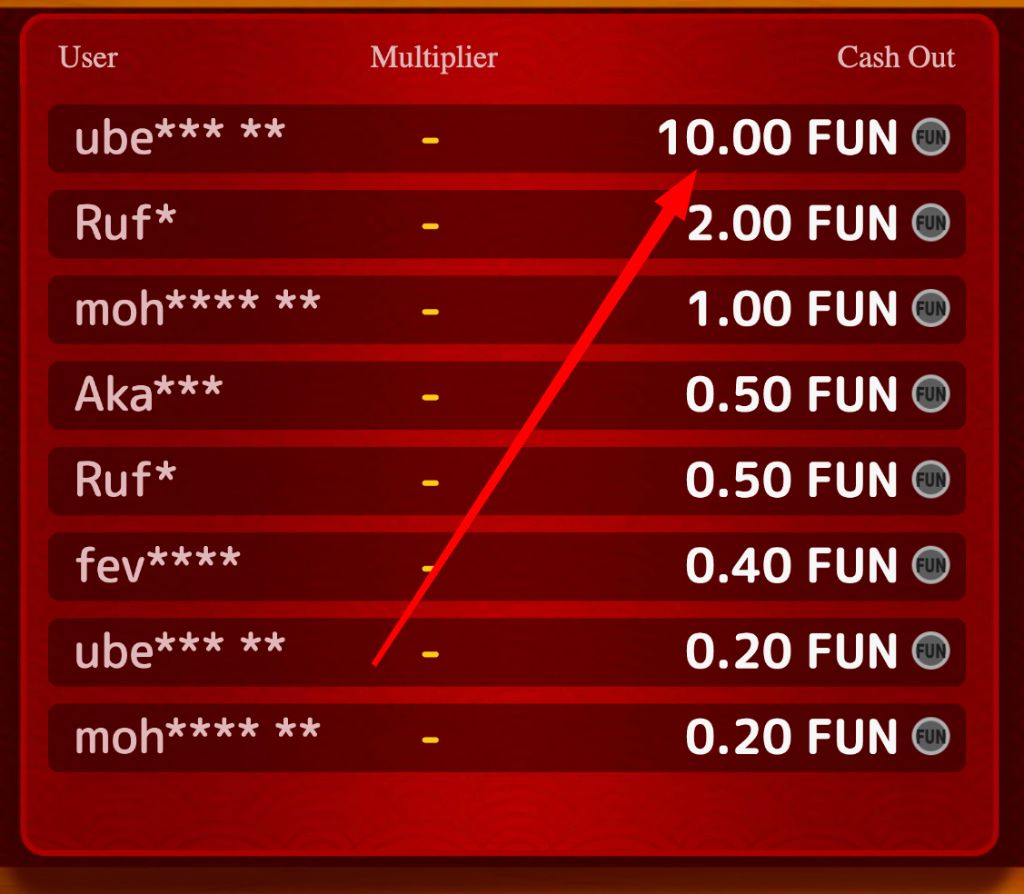
Some players are only here for the thrill of the big number, and that's fine — as long as the money is set aside for it. The chase means staking small amounts and letting them run toward high multipliers, knowing most will crash before you cash out. The maths is brutal: aim for 10x and you'll lose most of the time, but the occasional hit is big enough to make it interesting.
If you play this way, only use money you've already written off and keep each stake tiny. The chase is entertainment, not income. Think of it as paying for a few minutes of high-tension fun, and never raise your stake to "win back" what you've lost — that's how a bit of fun turns into a real problem.
Why Predictors and Hacks Don't Work
You will see countless apps, Telegram channels and videos promising a "predictor" that reveals the next crash point, or a "hack" that guarantees wins. Every single one of them is a scam. Because the outcome is generated by a provably fair RNG and committed before the round, there is no signal to read and no pattern to crack. These tools either show random guesses dressed up as predictions, or they exist to harvest your login details, your money, or both.
The history bar can be fascinating to watch, but it has zero predictive power — a string of low crashes makes the next high one no more likely. The only "edge" that exists in a crash game is the discipline to manage your bankroll and cash out on a plan. Anyone telling you otherwise wants something from you.
Ten Rules of Disciplined Play
- Set a budget before you open the game, and never exceed it.
- Keep each bet tiny — 1–2% of your bankroll at most.
- Choose a cash-out target and let auto cash-out enforce it.
- Bank small wins gladly — frequent 1.3x payouts beat rare wipeouts.
- Use the two-bet hedge to soften variance.
- Never chase losses by increasing your stake.
- Ignore predictors and any "guaranteed" system.
- Take breaks — fatigue leads to sloppy timing.
- Set a win goal and walk away once you reach it.
- Master the demo first so real stakes never catch you out.
Test a strategy risk-free
Try the low-multiplier and two-bet approaches in the free demo before committing a single rupee.